Why pain often appears long after the real problem began
Why pain often appears long after the real problem began
Pain can feel sudden.
You bend down. You turn. You wake up one morning.
And something is wrong.
It feels like it happened in that moment.
But in most cases, that is not where the problem began.
The body adapts first
Your body is designed to cope.
When load increases, it adapts.
Muscles compensate. Movement patterns change. Other areas take over.
For a while, this works remarkably well.
You continue functioning.
Often without noticing anything is building underneath.
The accumulation of load
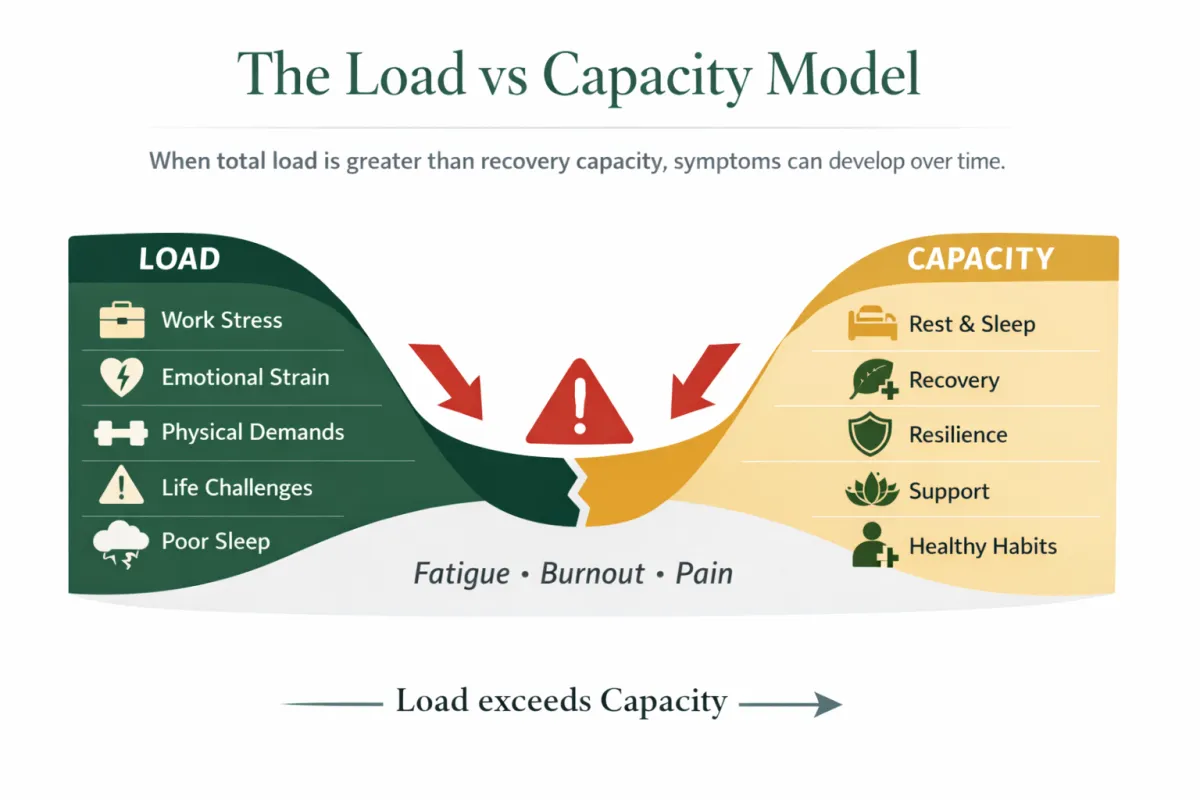
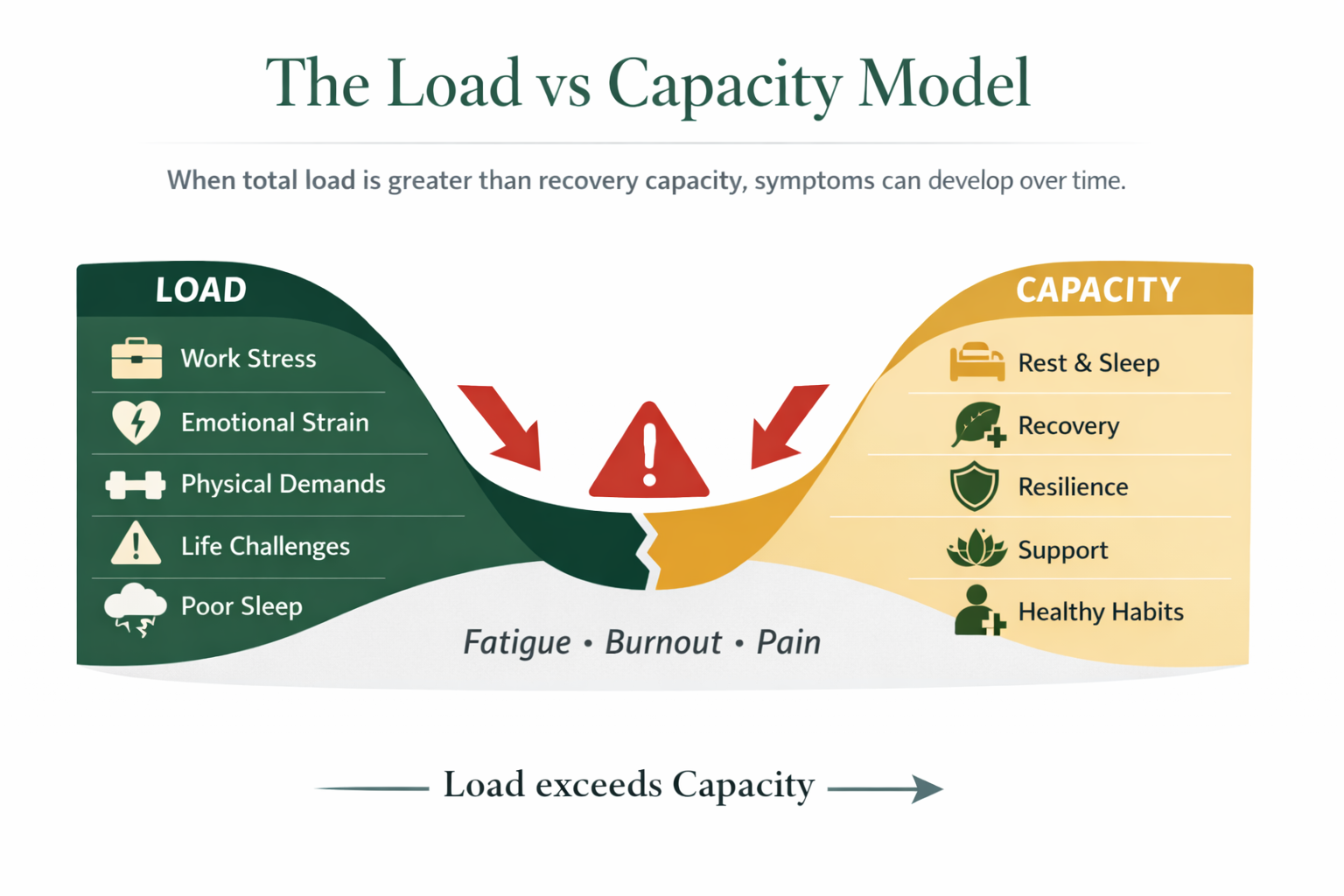
If load continues to exceed capacity, those adaptations become strained.
They hold for a time.
But gradually, the margin reduces.
The system becomes less able to compensate.
The moment pain appears
Pain tends to appear at the point where the system can no longer keep up.
It is not the start of the problem.
It is the signal that the system has reached its limit.
This is why people often say:
“It just came out of nowhere.”
But when you look back, there has usually been a pattern building over time.
A different way to respond
If you treat pain as the starting point, you tend to focus only on the symptom.
If you see it as the result of accumulated load, you look differently.
You ask:
What has been happening over time?
Where has load been building?
Where has capacity been reduced?
That perspective leads to more useful answers.
Read the full model: https://loadandcapacity.com/load-vs-capacity
Return to hub: https://loadandcapacity.com/load-vs-recovery
