Why Rest Does Not Always Feel Restorative
Why Rest Does Not Always Feel Restorative
Most people do not suddenly become overwhelmed.
What usually happens is much quieter.
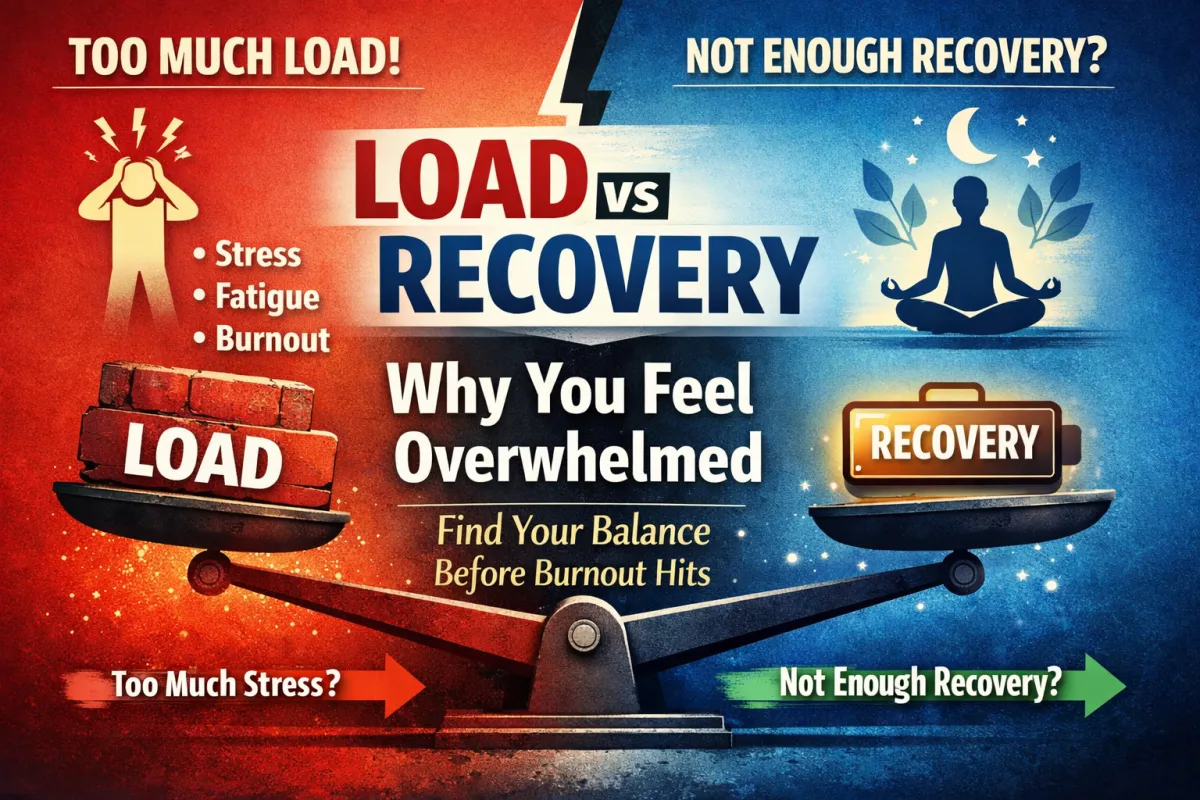
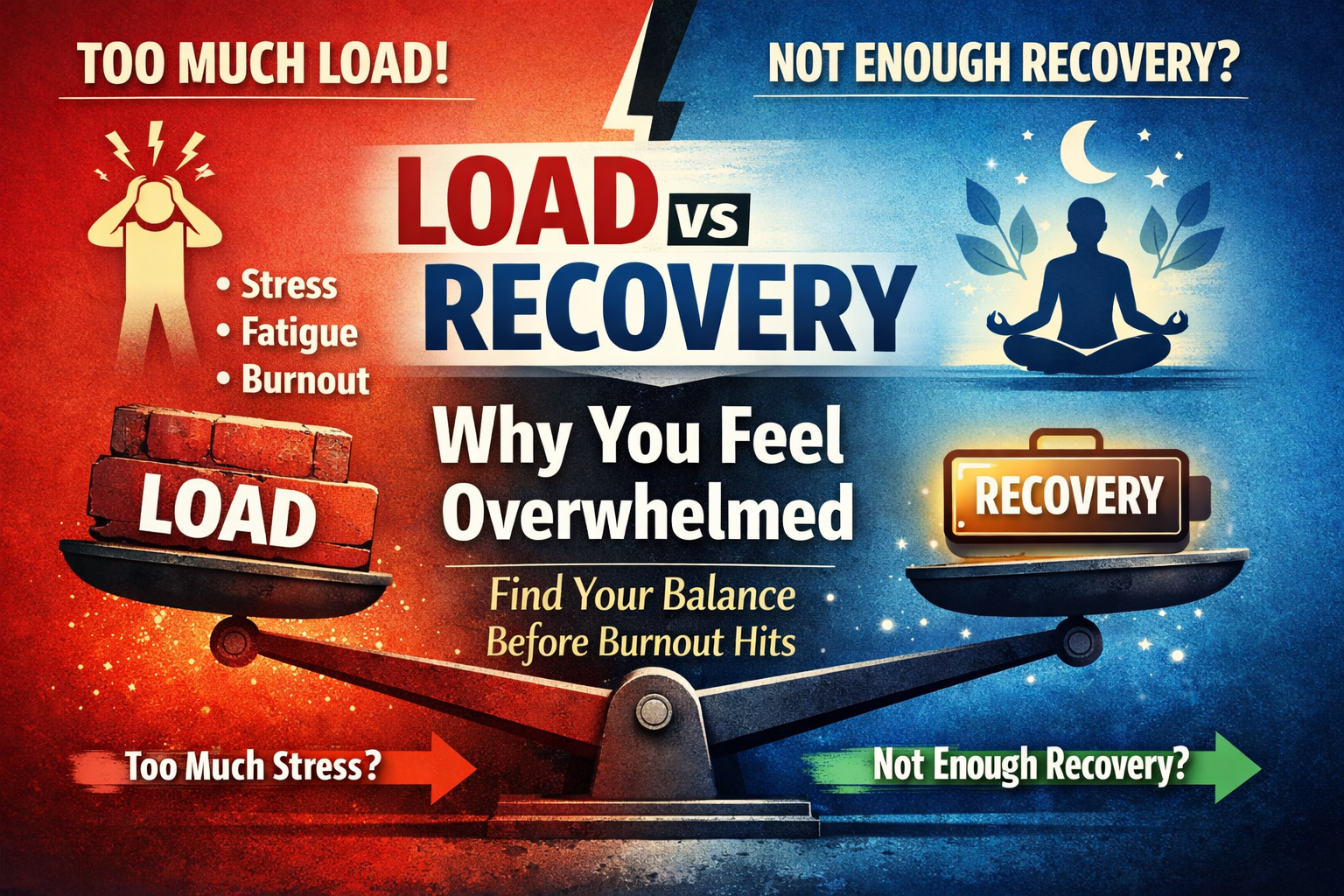
The total load on the system rises, recovery slowly falls behind, and the body begins to change how it responds.
That is the lens behind Load and Capacity. It is also the reason the idea of load vs recovery is so useful. Once you understand the balance between what is being asked of you and how well you are recovering from it, many symptoms stop looking random.
If you want the wider framework first, read The Load vs Capacity model. It explains why the same life can feel manageable in one season and overwhelming in another.
Stopping is not the same as recovering
Many people rest by collapsing in front of a screen, lying down while still thinking about work, or taking a break without ever really switching off. That may reduce activity, but it does not always create proper recovery. Recovery happens when the system genuinely begins to settle.
Why unresolved load follows you into rest
If the body is carrying too much pressure, rest can feel shallow. You may stop moving, but mentally and physically the system is still braced. That is why people sometimes say they had time off but still do not feel better.
What restorative rest usually includes
Restorative recovery often involves less stimulation, less decision-making, less urgency, and more signals of safety. It gives the body a chance to move out of constant readiness. Without that shift, rest can remain partial and disappointing.
The practical takeaway
If rest is not helping, do not assume you are beyond help. Look more closely at what kind of rest you are actually getting, what stress is still active in the background, and whether the system ever fully gets permission to stand down.
How this fits into load vs recovery
The question is rarely just, “What symptom do I have?”
The more useful question is this:
How much load is my body carrying right now, and how much genuine recovery is it getting?
When load keeps outpacing recovery, capacity usually begins to fall. Things that once felt ordinary can start to feel heavy. Patience shortens. Sleep becomes lighter. Energy becomes less reliable.
That is why load vs recovery is such a practical way of thinking about health. It helps you stop chasing isolated symptoms and start looking at the balance that is producing them.
Useful signs to notice
- you stop, but do not really switch off
- screens fill every pause
- your mind stays on tomorrow while your body tries to rest
- downtime still contains stimulation and decision-making
- the system never gets a clear signal that it is safe to settle
Start with a clearer picture
If this feels familiar, the next step is not to guess and it is not to push harder.
Start by getting a clearer picture of your own pattern.
Take the Free Load and Capacity Assessment to see where your current load is coming from, where recovery is being lost, and what may be reducing your capacity right now.
You can also return to the main framework at Load and Capacity or read the model in more depth at Load vs Capacity.
Related reading
- Why Am I Always Tired Even After Sleeping?
- Recovery Is More Than Sleep
- Load vs Recovery: The Real Reason You Feel Overwhelmed
Final thought
Most people do not need a harsher explanation of what is happening to them.
They need a clearer one.
When you understand load, recovery, and capacity together, the pattern becomes easier to see. And once you can see the pattern, you can start changing it.
