Why Am I Always Tired Even After Sleeping?
Why Am I Always Tired Even After Sleeping?
Most people do not suddenly become overwhelmed.
What usually happens is much quieter.
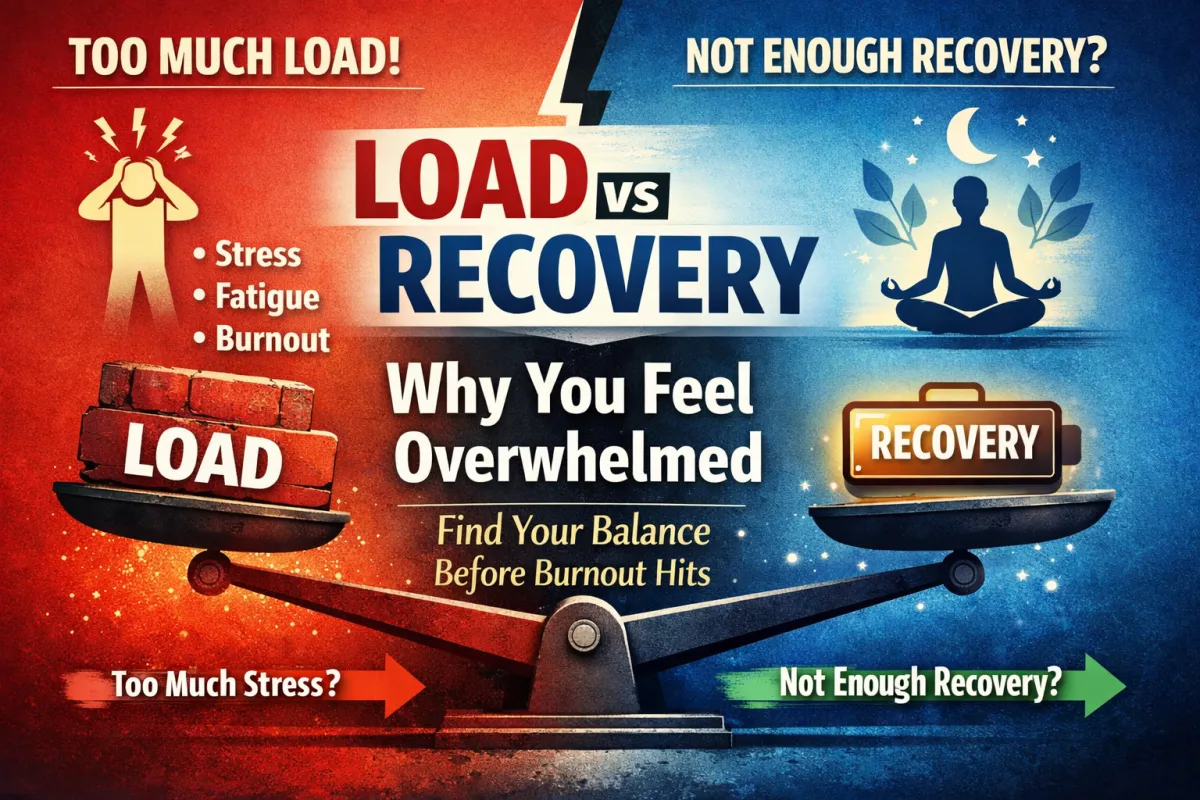
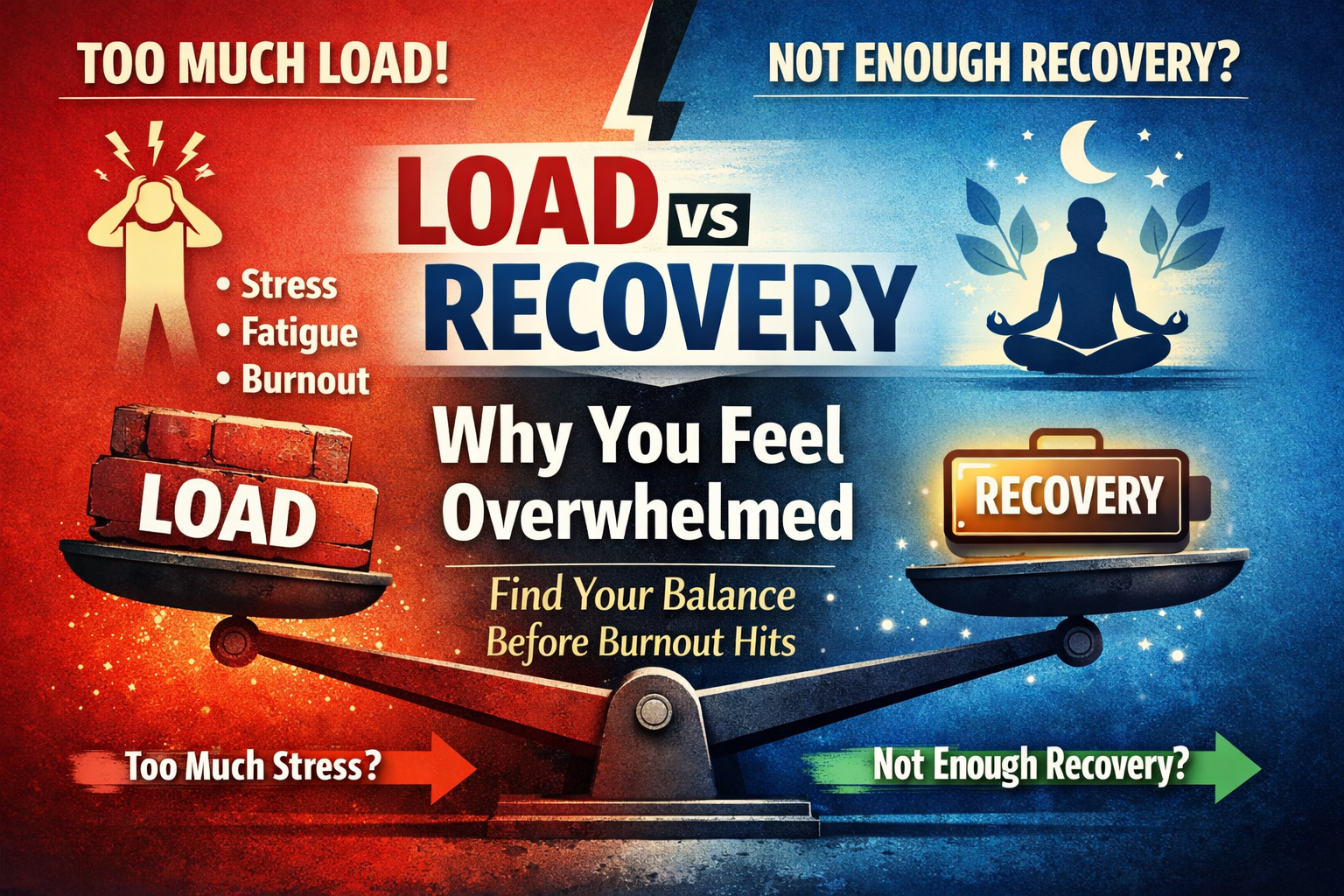
The total load on the system rises, recovery slowly falls behind, and the body begins to change how it responds.
That is the lens behind Load and Capacity. It is also the reason the idea of load vs recovery is so useful. Once you understand the balance between what is being asked of you and how well you are recovering from it, many symptoms stop looking random.
If you want the wider framework first, read The Load vs Capacity model. It explains why the same life can feel manageable in one season and overwhelming in another.
Sleep quantity is not the whole story
Many people assume that if they are in bed for enough hours they should wake up restored. Unfortunately, recovery is not only about time in bed. If your system stays tense, vigilant, or overloaded, sleep may be lighter and less restorative even when the clock says you have slept long enough.
Why fatigue can persist
If load stays high during the day and your system cannot properly settle at night, you wake into the next day still carrying yesterday. That creates a rolling build-up. Fatigue then stops being a sign of one bad night and becomes a sign of recovery falling behind.
Hidden reasons sleep does not refresh you
Mental carry-over, emotional strain, late work, physical tension, inconsistent routines, and background worry can all reduce sleep quality. They may not stop you from sleeping completely, but they can stop sleep from doing its job well enough.
A better question to ask
Instead of only asking how many hours you got, ask how much load your body is trying to recover from, how settled your system is when you go to bed, and whether your life currently allows proper recovery to happen. That question often leads to a more useful answer.
How this fits into load vs recovery
The question is rarely just, “What symptom do I have?”
The more useful question is this:
How much load is my body carrying right now, and how much genuine recovery is it getting?
When load keeps outpacing recovery, capacity usually begins to fall. Things that once felt ordinary can start to feel heavy. Patience shortens. Sleep becomes lighter. Energy becomes less reliable.
That is why load vs recovery is such a practical way of thinking about health. It helps you stop chasing isolated symptoms and start looking at the balance that is producing them.
Useful signs to notice
- sleep quantity is reasonable, but sleep quality is poor
- mental load carries into the night
- the body never fully drops out of alert mode
- daily demands stay high, so recovery keeps playing catch-up
- fatigue becomes cumulative rather than occasional
Start with a clearer picture
If this feels familiar, the next step is not to guess and it is not to push harder.
Start by getting a clearer picture of your own pattern.
Take the Free Load and Capacity Assessment to see where your current load is coming from, where recovery is being lost, and what may be reducing your capacity right now.
You can also return to the main framework at Load and Capacity or read the model in more depth at Load vs Capacity.
Related reading
- Why Rest Does Not Always Feel Restorative
- Recovery Is More Than Sleep
- Load vs Recovery: The Real Reason You Feel Overwhelmed
Final thought
Most people do not need a harsher explanation of what is happening to them.
They need a clearer one.
When you understand load, recovery, and capacity together, the pattern becomes easier to see. And once you can see the pattern, you can start changing it.
