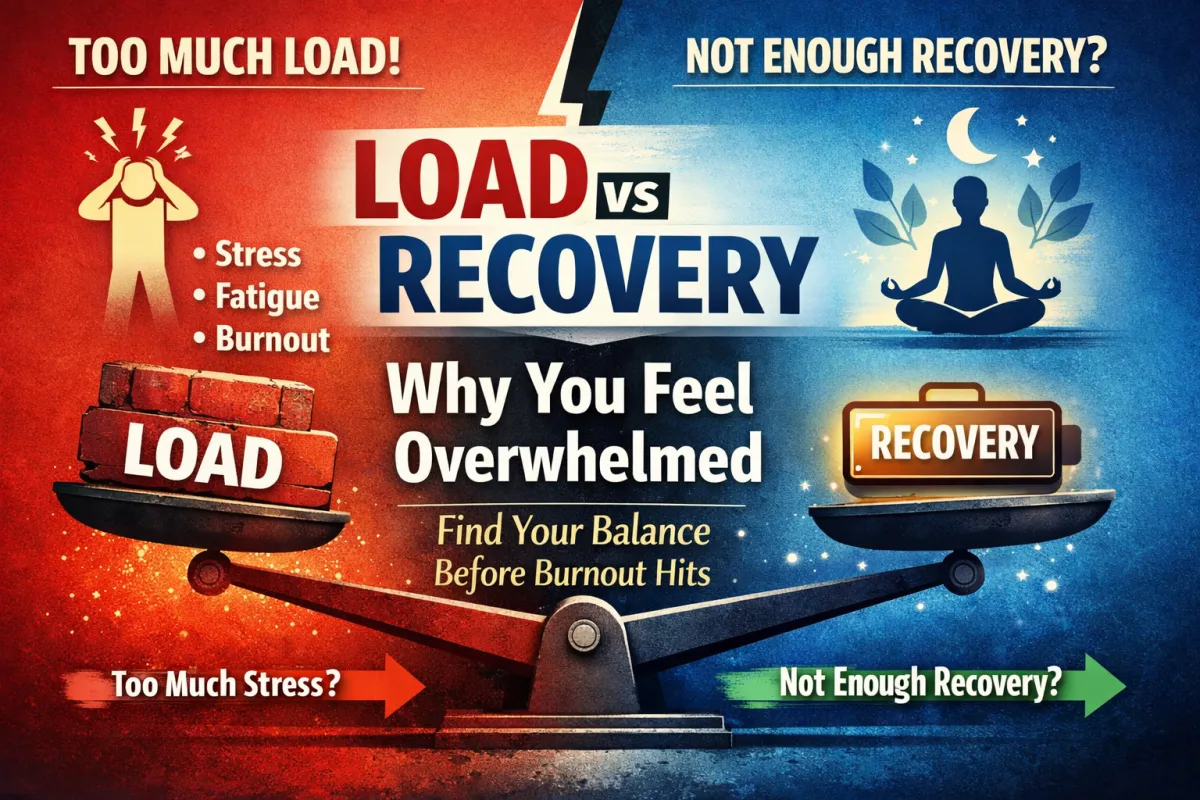
Load vs Recovery: Why You Feel Overwhelmed (And What to Do)
Load vs Recovery: The Real Reason You Feel Overwhelmed
Definition
Load vs recovery describes the balance between the demands placed on your body and your ability to recover. When load exceeds recovery over time, fatigue, stress, and burnout begin to appear.
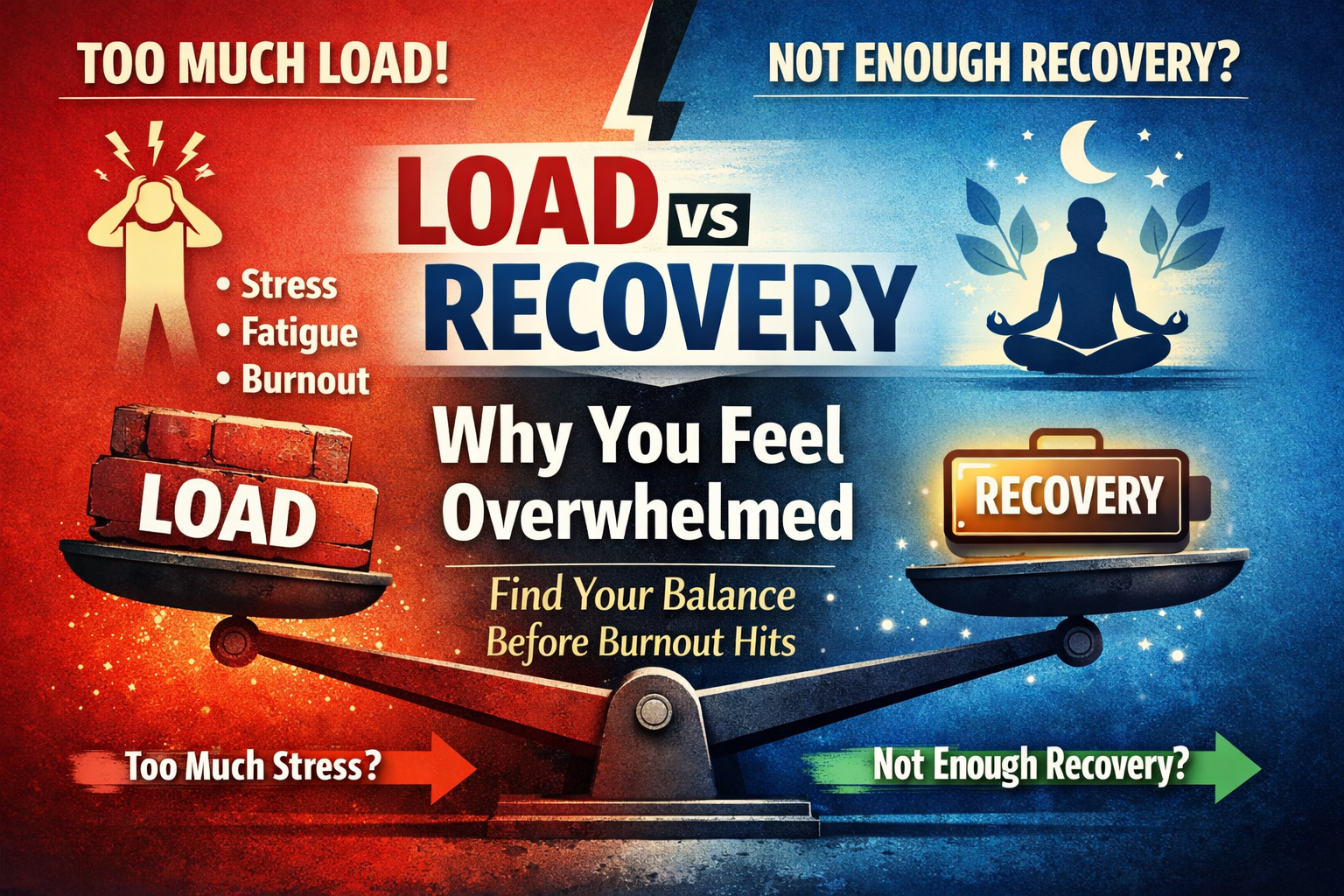
A Simple Way to Understand How You Feel
There is usually a very simple reason you feel overwhelmed.
Not because you are failing.
Not because something is wrong with you.
But because your system is trying to manage more than it can recover from.
At the centre of this is one idea:
Your body is always balancing:
Load (everything being asked of you)
Recovery (your ability to restore)
When that balance shifts, your experience changes.
What “Load vs Recovery” Actually Means
Load includes:
work pressure
emotional strain
poor sleep
constant thinking
responsibility for others
Recovery includes:
deep rest
quiet time
nervous system settling
space without pressure
To understand the deeper mechanics, see:
👉 Load vs Capacity
This expands the model to include how your overall ability to cope changes over time.
Why You Feel Overwhelmed (Even If Nothing Is “Wrong”)
Your body constantly monitors what is happening.
If demands increase and recovery does not keep up, it adapts.
At first, this is subtle:
less energy
reduced focus
poorer sleep
Over time:
fatigue
irritability
anxiety
burnout
This is not failure.
It is your system responding.
The Quiet Build-Up Most People Miss
Load rarely arrives dramatically.
It builds:
a bit more work
slightly less rest
ongoing background stress
problems that never fully resolve
Each part manageable.
Together, too much.
What Happens When Recovery Falls Behind
When recovery is insufficient, your body adjusts.
It will:
conserve energy
increase sensitivity
narrow focus
make rest feel essential
This is often misinterpreted as:
low motivation
poor discipline
But it is usually protection.
Signs Your Load Is Too High
Common signs include:
constant tiredness
poor sleep
irritability
low resilience
brain fog
feeling overwhelmed
These are not random.
They are signals.
Why Trying Harder Often Backfires
Most people respond by pushing harder.
They add:
more discipline
more routines
more pressure
Which increases load.
And makes things worse.
How to Restore Balance
You do not need to overhaul your life.
You need to change the balance.
That often means:
reducing unnecessary demands
protecting recovery
allowing your system to settle
removing hidden stressors
Small changes here create large shifts over time.
Start With Clarity (Free Assessment)
Most people never properly map their situation.
They feel the symptoms but do not see the pattern.
You can change that here:
👉 Free Load and Capacity Assessment
This will help you identify:
where your load is coming from
where recovery is being lost
how your capacity is being affected
A Simpler Way Forward
You are not broken.
You may simply be overloaded.
And once you see that clearly, the path forward becomes much simpler.
