How to Rebuild Energy Without Pushing Harder
How to Rebuild Energy Without Pushing Harder
Most people do not suddenly become overwhelmed.
What usually happens is much quieter.
The total load on the system rises, recovery slowly falls behind, and the body begins to change how it responds.
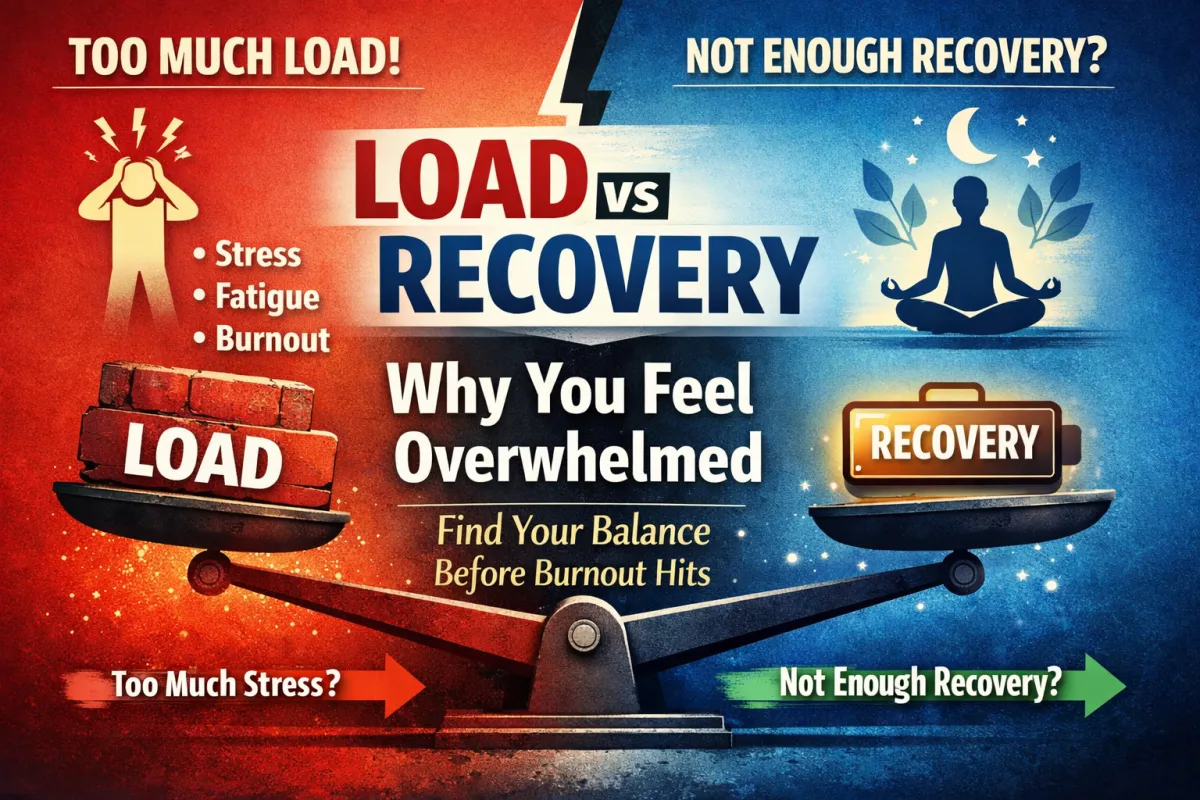
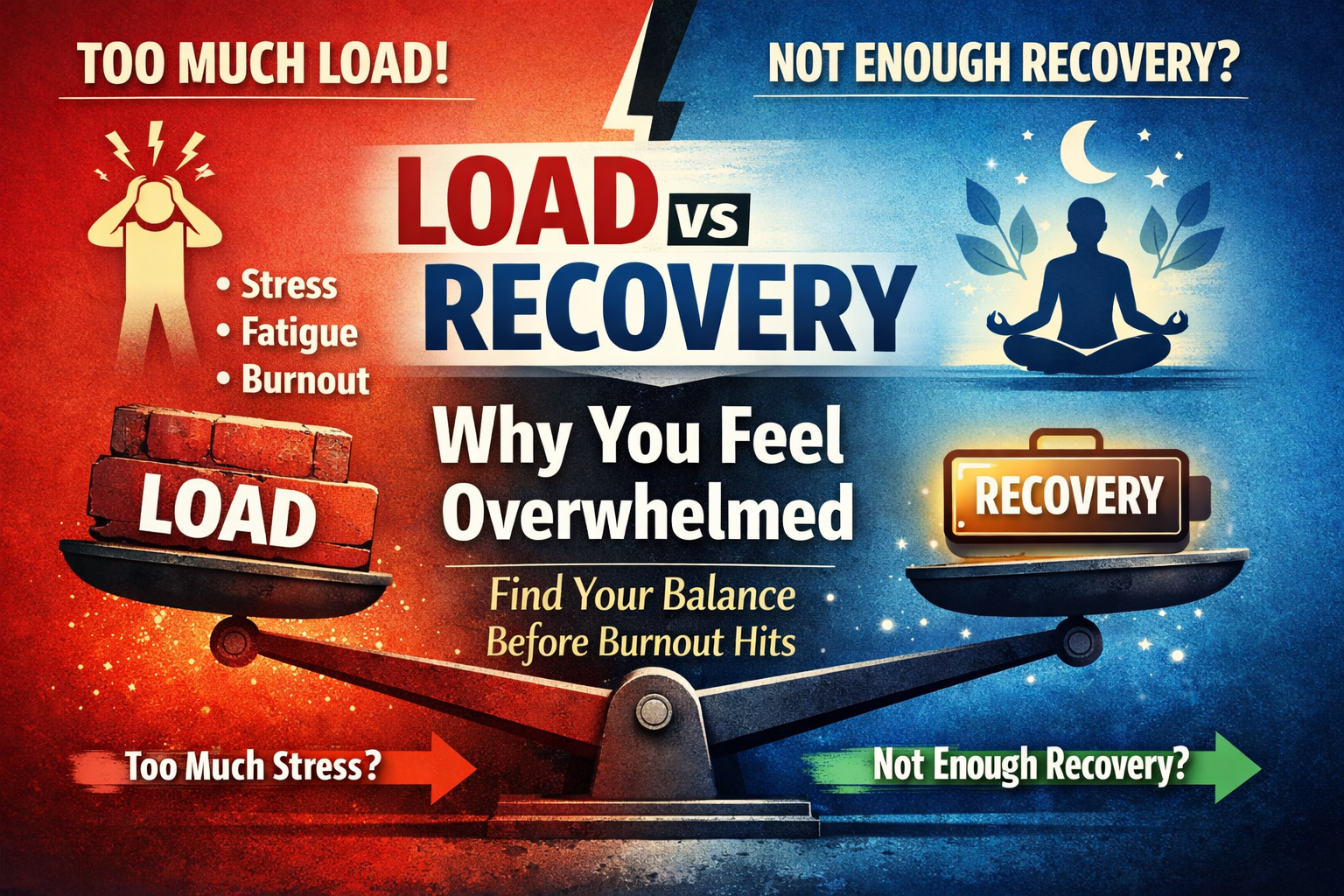
That is the lens behind Load and Capacity. It is also the reason the idea of load vs recovery is so useful. Once you understand the balance between what is being asked of you and how well you are recovering from it, many symptoms stop looking random.
If you want the wider framework first, read The Load vs Capacity model. It explains why the same life can feel manageable in one season and overwhelming in another.
Why effort is not always the answer
When energy drops, the instinct is often to try harder. People tighten routines, push through, and ask more from a system that is already strained. That may work briefly, but it often deepens the problem because more effort can become more load.
Start by lowering the demand
Rebuilding energy often begins with reducing what is draining you most. That could mean fewer commitments, simpler expectations, better boundaries, more regular meals, earlier nights, less mental carry-over, or a more realistic training load. The exact answer varies, but the principle stays the same. Reduce what keeps emptying the tank.
Protect what actually restores you
Once demand comes down, recovery has a chance to work better. This is where sleep, quiet, movement, time outdoors, supportive relationships, and genuine downtime begin to matter more. Recovery works best when it is not constantly being interrupted by the same pressures that created the problem.
Build steadily, not dramatically
The body usually responds better to consistency than intensity. Small stable improvements in load and recovery often rebuild energy more effectively than one perfect weekend or one heroic plan. The aim is not to force recovery. It is to create conditions that allow it.
How this fits into load vs recovery
The question is rarely just, “What symptom do I have?”
The more useful question is this:
How much load is my body carrying right now, and how much genuine recovery is it getting?
When load keeps outpacing recovery, capacity usually begins to fall. Things that once felt ordinary can start to feel heavy. Patience shortens. Sleep becomes lighter. Energy becomes less reliable.
That is why load vs recovery is such a practical way of thinking about health. It helps you stop chasing isolated symptoms and start looking at the balance that is producing them.
Useful signs to notice
- reduce the biggest drains first
- protect regular sleep and meals
- create genuine pauses during the day
- lower unnecessary commitments
- rebuild steadily instead of trying to fix everything at once
Start with a clearer picture
If this feels familiar, the next step is not to guess and it is not to push harder.
Start by getting a clearer picture of your own pattern.
Take the Free Load and Capacity Assessment to see where your current load is coming from, where recovery is being lost, and what may be reducing your capacity right now.
You can also return to the main framework at Load and Capacity or read the model in more depth at Load vs Capacity.
Related reading
- Burnout Is Not Laziness
- How Chronic Stress Reduces Recovery Capacity
- Load vs Recovery: The Real Reason You Feel Overwhelmed
Final thought
Most people do not need a harsher explanation of what is happening to them.
They need a clearer one.
When you understand load, recovery, and capacity together, the pattern becomes easier to see. And once you can see the pattern, you can start changing it.
