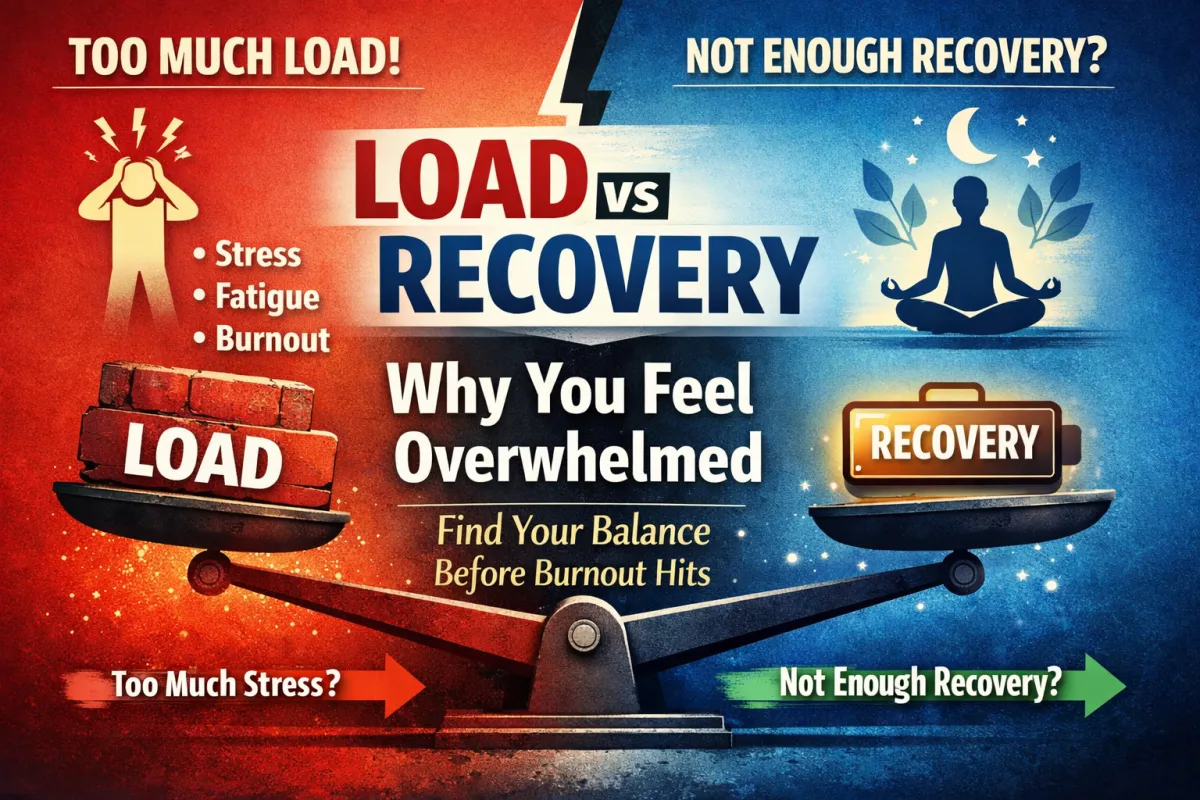
Do You Need More Rest or Less Load?
Do You Need More Rest or Less Load?
Most people do not suddenly become overwhelmed.
What usually happens is much quieter.
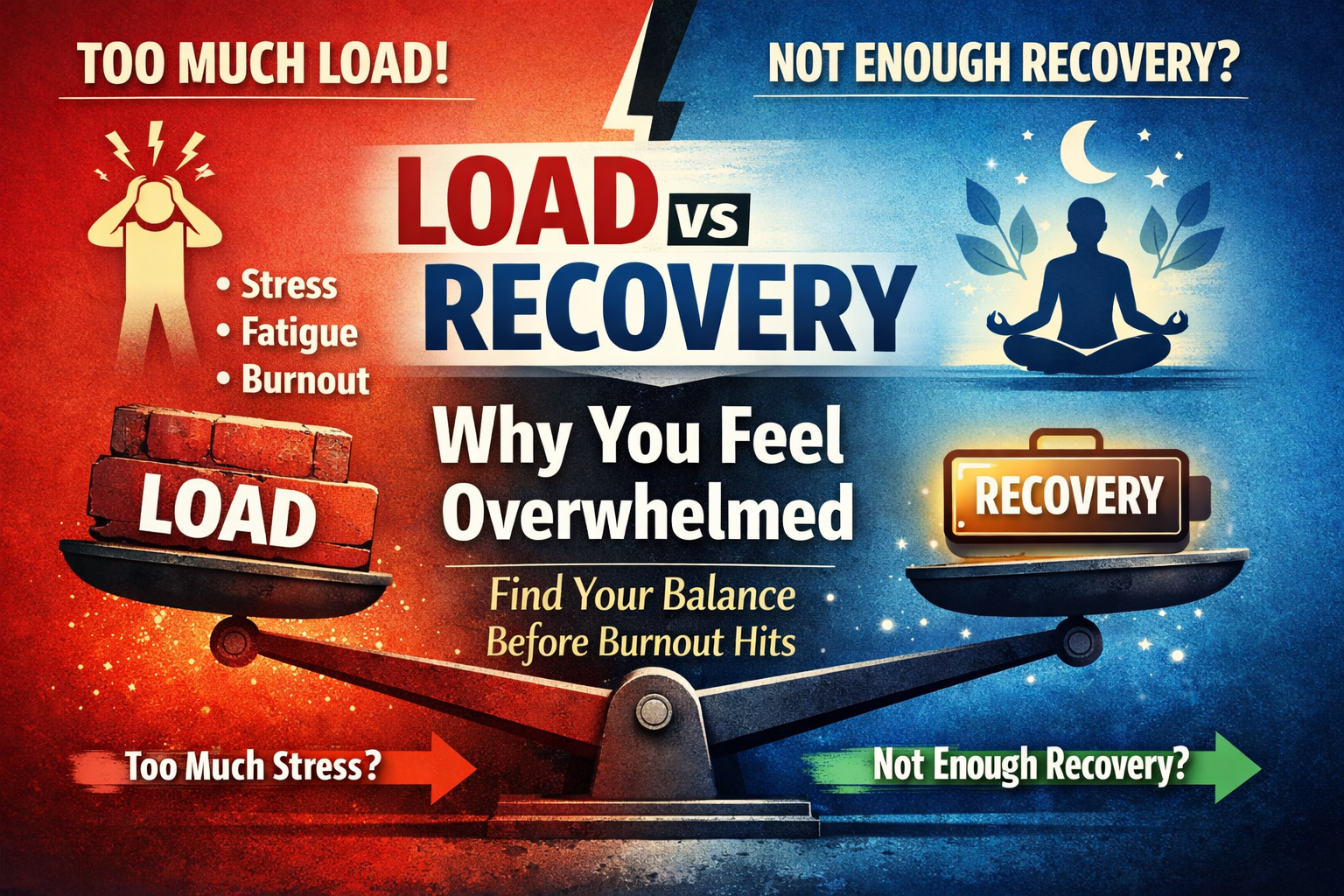
The total load on the system rises, recovery slowly falls behind, and the body begins to change how it responds.
That is the lens behind Load and Capacity. It is also the reason the idea of load vs recovery is so useful. Once you understand the balance between what is being asked of you and how well you are recovering from it, many symptoms stop looking random.
If you want the wider framework first, read The Load vs Capacity model. It explains why the same life can feel manageable in one season and overwhelming in another.
Why this question matters
People often assume that if they feel exhausted the answer must be more rest. Sometimes that is true. Sometimes the real issue is that the load never reduces, so recovery never has a fair chance to work. If demand stays too high, even good rest may not be enough.
When rest helps most
If you have had a period of unusually high effort, broken sleep, travel, illness, or emotional demand, extra recovery can make a real difference. In these situations the system often responds quickly when pressure drops and rest becomes more consistent.
When reducing load matters more
If your life is full of ongoing demands, constant interruption, and very little space, the body may need fewer inputs rather than better optimisation. Sometimes what helps most is not another recovery technique but one less commitment, one less decision, or one less demand that keeps the system switched on.
Usually it is both
In practice, most people need some combination of reduced load and better recovery. The important part is being honest about where the gap is. Otherwise you can spend months trying to recover inside conditions that keep recreating the same problem.
How this fits into load vs recovery
The question is rarely just, “What symptom do I have?”
The more useful question is this:
How much load is my body carrying right now, and how much genuine recovery is it getting?
When load keeps outpacing recovery, capacity usually begins to fall. Things that once felt ordinary can start to feel heavy. Patience shortens. Sleep becomes lighter. Energy becomes less reliable.
That is why load vs recovery is such a practical way of thinking about health. It helps you stop chasing isolated symptoms and start looking at the balance that is producing them.
Useful signs to notice
- you recover well when demand drops for a few days
- fatigue returns quickly once normal life resumes
- even good habits cannot offset constant pressure
- you feel tired, but also overfull
- the issue is not only energy loss, but too much incoming demand
Start with a clearer picture
If this feels familiar, the next step is not to guess and it is not to push harder.
Start by getting a clearer picture of your own pattern.
Take the Free Load and Capacity Assessment to see where your current load is coming from, where recovery is being lost, and what may be reducing your capacity right now.
You can also return to the main framework at Load and Capacity or read the model in more depth at Load vs Capacity.
Related reading
- Recovery Is More Than Sleep
- How to Rebuild Energy Without Pushing Harder
- Load vs Recovery: The Real Reason You Feel Overwhelmed
Final thought
Most people do not need a harsher explanation of what is happening to them.
They need a clearer one.
When you understand load, recovery, and capacity together, the pattern becomes easier to see. And once you can see the pattern, you can start changing it.
