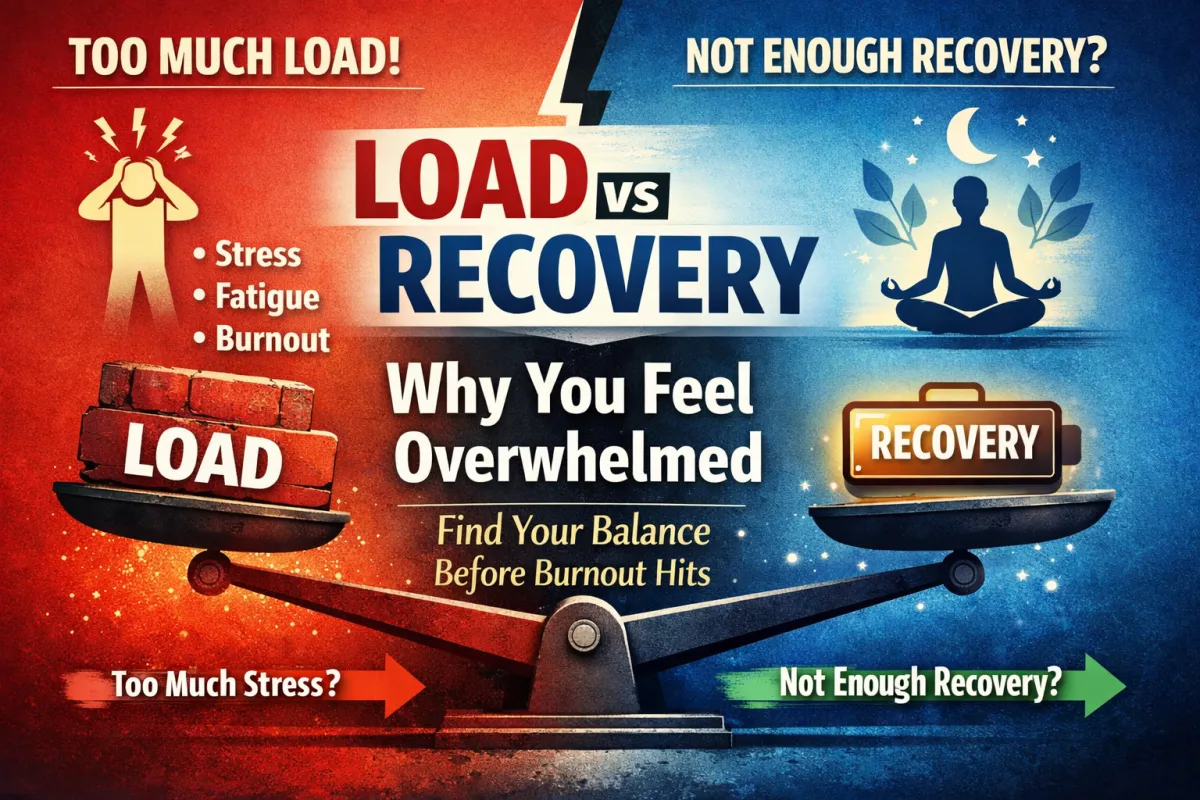
Burnout Is Not Laziness: Why Your Energy Has Changed
Burnout Is Not Laziness: Why Your Energy Has Changed
Most people do not suddenly become overwhelmed.
What usually happens is much quieter.
The total load on the system rises, recovery slowly falls behind, and the body begins to change how it responds.
That is the lens behind Load and Capacity. It is also the reason the idea of load vs recovery is so useful. Once you understand the balance between what is being asked of you and how well you are recovering from it, many symptoms stop looking random.
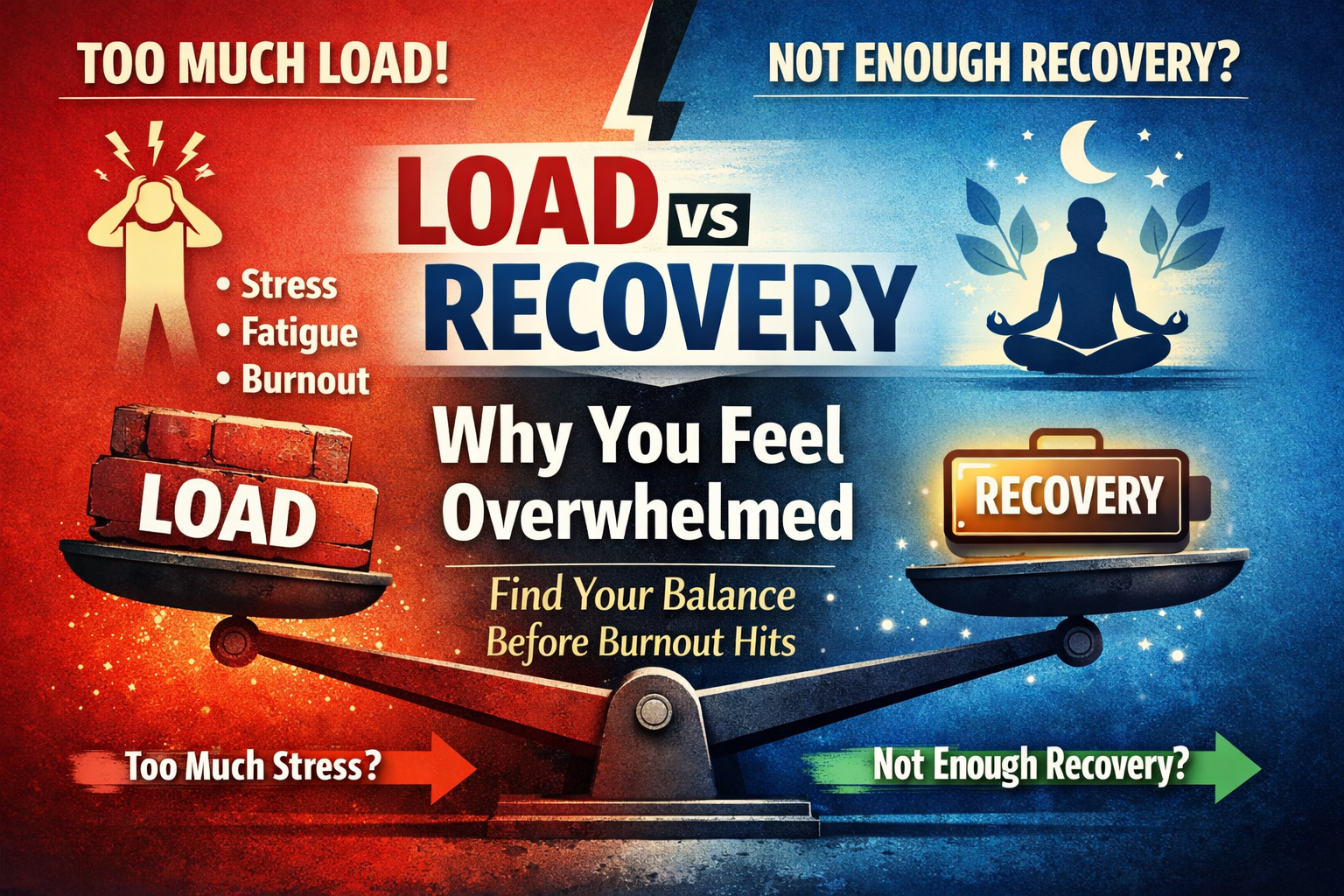
If you want the wider framework first, read The Load vs Capacity model. It explains why the same life can feel manageable in one season and overwhelming in another.
Why people misread burnout
When energy changes, people often judge themselves harshly. They say they have become lazy, weak, or unmotivated. Burnout is usually nothing like that. It is more often the body reducing output because it has been asked to carry too much for too long.
Conservation is not failure
If recovery has been insufficient, your system begins to conserve. Focus narrows. Effort feels more expensive. Motivation drops. This can look like avoidance from the outside, but from the inside it is usually a protective response. The body is trying to stop the gap between load and recovery from widening even further.
Why pushing harder backfires
Once burnout patterns are present, more pressure often makes things worse. More discipline, more guilt, and more self-criticism all add further demand. If the system is already overloaded, those responses rarely solve the problem.
What a kinder interpretation changes
The moment you stop reading burnout as a character flaw, you can start asking better questions. What has been loading the system? What has been reducing recovery? What needs to change first? That shift creates room for practical action instead of endless self-blame.
How this fits into load vs recovery
The question is rarely just, “What symptom do I have?”
The more useful question is this:
How much load is my body carrying right now, and how much genuine recovery is it getting?
When load keeps outpacing recovery, capacity usually begins to fall. Things that once felt ordinary can start to feel heavy. Patience shortens. Sleep becomes lighter. Energy becomes less reliable.
That is why load vs recovery is such a practical way of thinking about health. It helps you stop chasing isolated symptoms and start looking at the balance that is producing them.
Useful signs to notice
- motivation feels flat even for things you care about
- simple decisions feel surprisingly hard
- rest does not quickly restore your energy
- you feel guilty for slowing down
- pressure increases faster than recovery
Start with a clearer picture
If this feels familiar, the next step is not to guess and it is not to push harder.
Start by getting a clearer picture of your own pattern.
Take the Free Load and Capacity Assessment to see where your current load is coming from, where recovery is being lost, and what may be reducing your capacity right now.
You can also return to the main framework at Load and Capacity or read the model in more depth at Load vs Capacity.
Related reading
- Hidden Sources of Load in Everyday Life
- How to Rebuild Energy Without Pushing Harder
- Load vs Recovery: The Real Reason You Feel Overwhelmed
Final thought
Most people do not need a harsher explanation of what is happening to them.
They need a clearer one.
When you understand load, recovery, and capacity together, the pattern becomes easier to see. And once you can see the pattern, you can start changing it.
